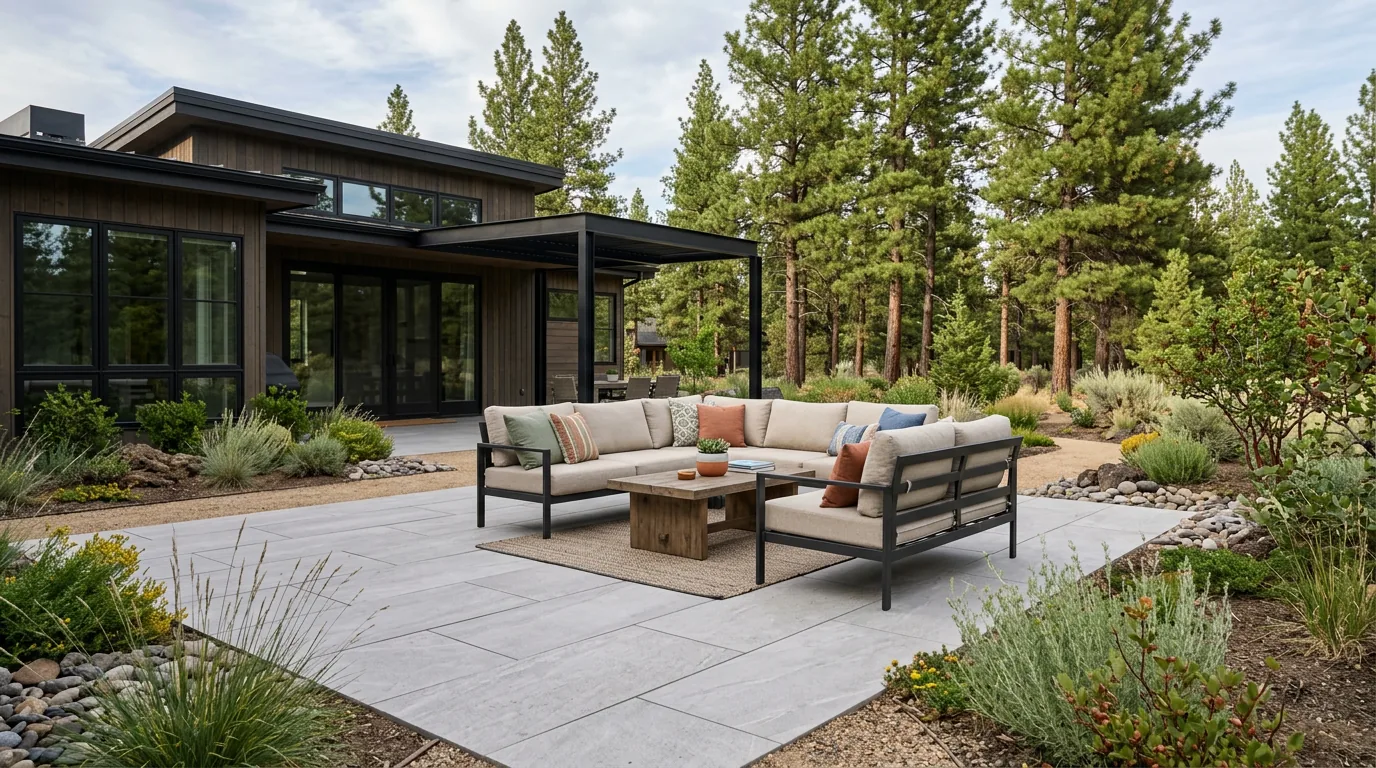
Choosing between concrete vs. porcelain pavers is one of the most practical decisions you can make when planning a patio, walkway, pool deck, or backyard project. Both materials look great once installed, and both hold up to foot traffic and weather. But the way each paving material performs over time, especially in wet and freeze-prone climates like Portland and the Pacific Northwest, is where the real differences show up.
If you live in an area with heavy rain, moss growth, and regular freeze-thaw cycles, the material you pick for your outdoor pavers will directly affect how much maintenance you do, how long your surface lasts, and how much you spend over the life of your outdoor living space. This guide breaks down porcelain pavers vs concrete pavers by manufacturing process, durability, cost, installation, and best use cases so you can match the right material to your project.
Key Takeaways
- Porcelain pavers absorb almost no water, making them a strong performer in freeze-thaw climates and wet conditions common in the Pacific Northwest.
- Concrete pavers cost less upfront and offer more shape and color variety, but they require more maintenance over time and can fade or stain.
- The best choice depends on your project type, budget, local climate, and whether you prioritize low long-term maintenance or lower initial cost.
Key Differences That Affect Your Decision
Porcelain pavers and concrete pavers differ in how they are made, how they handle moisture, and how they age. Those differences directly influence your outdoor flooring choice, especially when your project sits in a climate with rain eight months out of the year and temperatures that dip below freezing.
How Porcelain Pavers and Concrete Pavers Are Made
Porcelain pavers are made from dense, high-quality clay mixed with sand and minerals, then kiln-fired at temperatures above 2,200°F. That extreme heat creates a very hard, nearly nonporous surface. The result is closer to a porcelain slab than a standard outdoor porcelain tile, and yes, porcelain tiles can be used outside when they are rated for exterior applications.
Concrete pavers are made from a mix of cement, sand, aggregate, and water, then poured into molds and left to cure. They do not go through a high-heat firing process. This makes them easier and cheaper to produce in a wide range of shapes and sizes.
The manufacturing difference is the root cause of nearly every performance gap between the two materials.
Durability, Water Absorption, and Freeze-Thaw Performance
This is where the gap between porcelain vs concrete becomes most visible in the Pacific Northwest.
| Property | Porcelain Pavers | Concrete Pavers |
|---|---|---|
| Water absorption rate | Less than 0.5% | 5%–8% |
| Freeze-thaw resistance | Excellent | Moderate |
| Cracking risk over time | Very low | Moderate |
| Lifespan | 50+ years | 25–50 years |
Porcelain’s near-zero absorption rate means water does not penetrate the surface. In Portland, where freeze-thaw cycles happen regularly between November and March, this matters. Water trapped inside a concrete paver can expand when it freezes, causing surface spalling and cracking over several seasons.
Concrete pavers are still durable and handle normal wear well, but they are more vulnerable in consistently wet environments.
Appearance, Texture, and Landscape Design Options
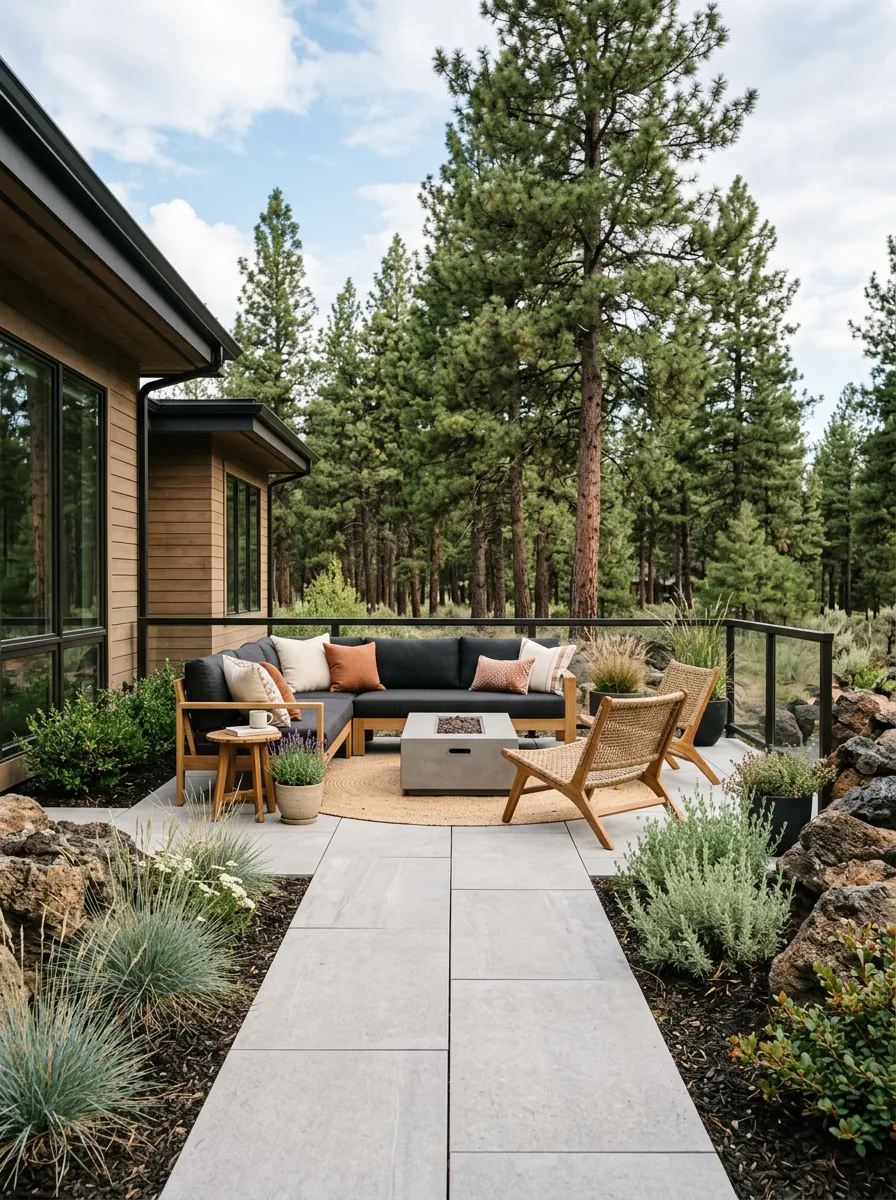
Porcelain paving can mimic the look of natural stone, wood grain, or polished concrete with a high level of detail. The color and pattern are baked into the material, so what you see on day one is close to what you will see in year ten.
Concrete pavers come in a broader range of shapes, including interlocking and tumbled styles. They offer a more natural, textured feel underfoot. Color is added through pigments mixed into the concrete, which means the surface can fade with UV exposure over several years.
If you want a modern, clean-lined look, porcelain slabs are a strong fit. If you prefer a traditional or rustic landscape design, concrete gives you more flexibility in shape and layout.
Maintenance, Stain Resistance, and Color Fading
Porcelain pavers resist stains, moss, and algae better than concrete because their surface is nearly nonporous. Spills, oil, and organic matter sit on top rather than absorbing in. A simple rinse or mild soap is usually enough to keep them clean.
Concrete pavers are more porous, so they stain more easily and can develop moss or algae in shaded, damp areas. In Portland, you will likely need to clean concrete pavers at least once or twice a year and reseal them every two to three years to maintain color and stain resistance.
Concrete pavers also fade more noticeably over time. Porcelain holds its color because the pigment is fired throughout the material.
Installation Methods, Base Prep, and Cutting Requirements
Both materials can be installed on a compacted gravel and sand base, which is the standard approach for most patios and walkways. Porcelain pavers can also be installed on pedestal systems, which are useful for rooftop decks, elevated patios, or areas where you need access to drainage or utilities beneath the surface.
Cutting porcelain requires a diamond wet saw and takes more time due to the material’s hardness. Concrete pavers are easier to cut with standard masonry tools, which makes DIY installation more realistic.
| Factor | Porcelain Pavers | Concrete Pavers |
|---|---|---|
| Standard on-grade install | Yes | Yes |
| Pedestal system install | Yes | No (too heavy) |
| Cutting difficulty | Higher (diamond saw) | Lower (masonry saw) |
| DIY-friendly | Moderate | High |
For most homeowners, concrete pavers are the easier self-install. Porcelain pavers typically benefit from professional installation, especially when precision cuts or pedestal systems are involved.
Best Uses, Costs, and the Right Pick for Your Space
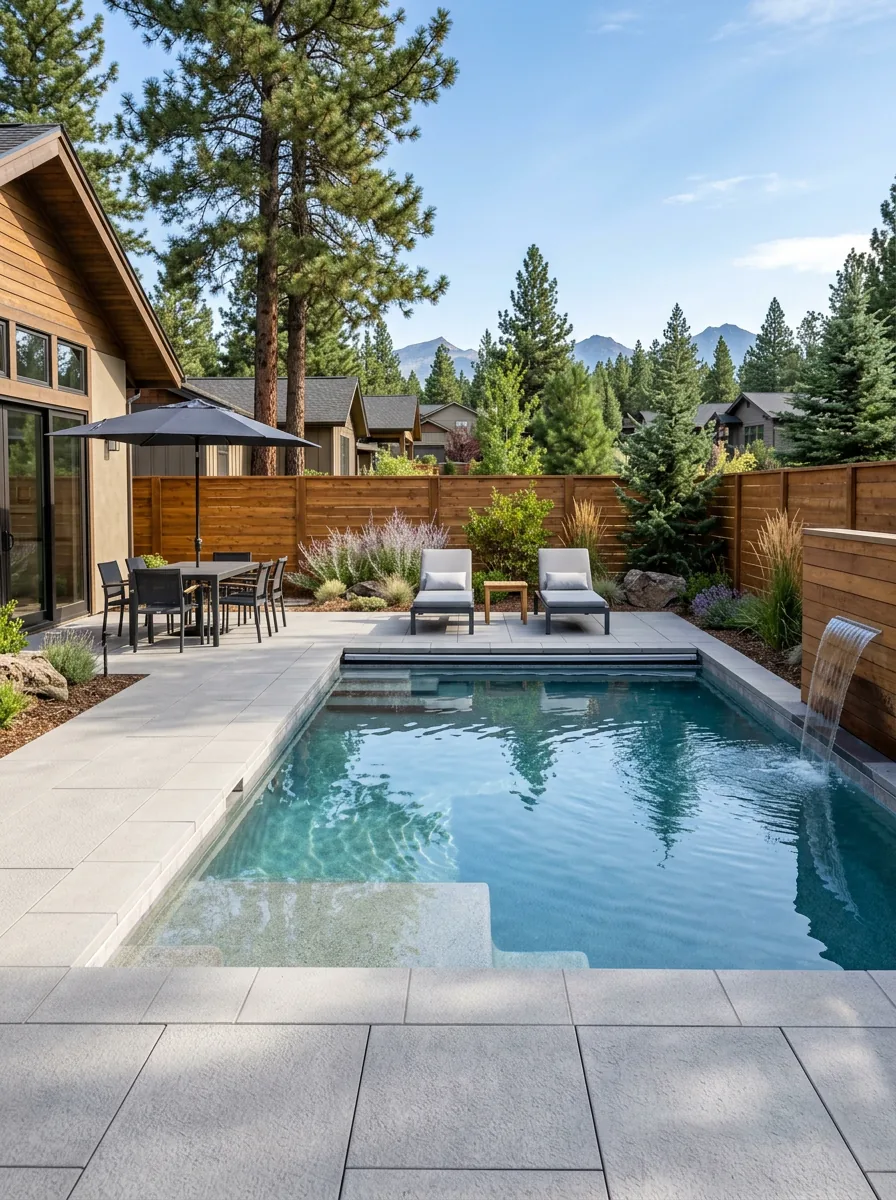
Matching the right paving material to your specific project type, budget, and local conditions is more useful than picking a winner in the abstract. Here is how each option stacks up by application, price, and Portland-area climate demands.
What Works Best for Patios, Walkways, Pool Areas, and Backyard Spaces
For patio pavers in a covered or semi-covered backyard, both materials perform well. Concrete patio pavers give you a wider selection of shapes and a lower entry cost. Porcelain pavers work especially well on open patios exposed to rain and shade because they resist moss growth and staining.
Around pools, porcelain is the stronger pick. Its low water absorption rate means it stays cooler underfoot and does not develop the algae film that concrete surfaces can get near standing water.
For walkways, concrete pavers in interlocking patterns handle foot traffic and minor settling well. Porcelain pavers offer a sleeker look but may require a more precise base to avoid lippage between pieces.
In backyard outdoor living spaces with dining areas, fire pits, or grills, porcelain resists grease and food stains with minimal effort. That convenience makes a real difference over years of use.
When Driveway Pavers Favor Concrete Over Porcelain
For most residential driveways, concrete pavers are the better-suited option. They are thicker, heavier, and designed to handle the weight and turning forces of vehicles. Interlocking concrete driveway pavers distribute load effectively and are easy to replace individually if one cracks.
Porcelain pavers are not commonly rated for vehicular traffic in standard thicknesses. Some manufacturers offer thicker porcelain products for driveways, but the cost jumps significantly, and installation requirements are more demanding.
If your primary project is a driveway, concrete pavers are the practical and cost-effective choice.
Upfront Pricing vs Long-Term Pavers Cost
The price difference between the two materials is real, but it narrows when you factor in long-term maintenance.
| Cost Factor | Porcelain Pavers | Concrete Pavers |
|---|---|---|
| Material cost per sq ft | $7–$14 | $4–$8 |
| Installation labor | Higher | Lower |
| Sealing (every 2–3 years) | Not required | $0.50–$1.50/sq ft |
| Cleaning frequency | Low | Moderate to high |
| Expected lifespan | 50+ years | 25–50 years |
Concrete pavers cost less to buy and install. Porcelain pavers cost more upfront but require almost no ongoing sealing or stain treatment. Over 20 to 30 years, the total pavers cost for both options can be closer than the initial price tags suggest.
Sustainability, Drainage, and Groundwater Recharge
Neither material is permeable on its own, but both can be installed with joints that allow water to pass through to the base layer below. This supports groundwater recharge and reduces stormwater runoff, which is especially relevant in Portland where drainage regulations are strict.
Porcelain pavers on pedestal systems create a gap beneath the surface that allows water to flow freely. This is a strong option for rooftop decks or elevated surfaces where drainage is a concern.
Concrete pavers are also available in permeable versions with wider joints or built-in drainage channels. These are a good choice for driveways and walkways where you want to manage rainwater on-site.
Both materials can be recycled at end of life, though concrete is more commonly reclaimed and reused in aggregate form.
How to Choose Based on Your Budget, Style, and Portland Climate
Start with your project type. If you are building a driveway, lean toward concrete. If you are designing a patio, pool deck, or modern outdoor living space, porcelain is worth the higher upfront cost.
Think about your climate exposure. Portland’s wet winters, freeze-thaw cycles, and shaded yards favor porcelain’s low absorption and resistance to moss and staining. Concrete works fine in these conditions too, but you will spend more time and money on maintenance.
Set your budget. If your goal is the lowest upfront cost for a large area, concrete pavers deliver the best value per square foot. If you want a surface you can largely ignore for decades, porcelain pavers pay off over time.
Pick the look you want. Porcelain suits modern, clean-lined landscape design. Concrete offers traditional, textured, and rustic styles that work well in Pacific Northwest gardens and naturalistic landscapes.
Frequently Asked Questions
Which option is more durable and long-lasting for an outdoor patio?
Porcelain pavers are generally more durable and longer-lasting, with expected lifespans exceeding 50 years. Their kiln-fired construction makes them harder, more scratch-resistant, and less prone to cracking from freeze-thaw cycles. Concrete pavers are still durable and can last 25 to 50 years with proper maintenance, but they are more susceptible to surface wear, fading, and moisture damage over time.
How do the total costs compare, including materials and installation?
Porcelain pavers cost $7 to $14 per square foot for materials, with higher installation labor costs. Concrete pavers run $4 to $8 per square foot with lower labor costs. When you add in sealing, cleaning, and potential replacement costs over 20 to 30 years, the total lifetime cost of both materials is often closer than the upfront numbers suggest.
What are the main disadvantages and maintenance concerns to consider for each material?
Concrete pavers absorb more water, stain more easily, and require resealing every two to three years. They can also develop moss and algae in damp, shaded spots common in the Pacific Northwest. Porcelain pavers are harder to cut, more expensive upfront, and less forgiving if your base prep is not level. They also offer fewer shape options compared to concrete.
Which surface provides better slip resistance and performance in wet or icy conditions?
Both materials can be manufactured with textured, slip-resistant surfaces. Porcelain pavers tend to perform slightly better in wet conditions because they do not absorb water, so the surface stays more consistent. In icy conditions, porcelain’s low absorption rate means less surface ice formation from trapped moisture. Concrete can become slippery when wet, especially if a smooth finish is used or if algae develops.
How do the installation methods and base requirements differ between the two?
Both materials install on a compacted gravel and sand base for standard on-grade projects. Porcelain pavers can also be set on adjustable pedestal systems for elevated surfaces. Cutting porcelain requires a diamond wet saw, which adds time and cost. Concrete pavers are easier to cut and more DIY-friendly, making them a practical choice for homeowners who want to handle installation themselves.
Can either surface be safely pressure washed, and what cleaning practices are recommended?
Both surfaces can be pressure washed, but you should use a lower setting (under 1,500 PSI) for concrete pavers to avoid dislodging joint sand or damaging the surface. Porcelain pavers handle pressure washing well due to their hardness. For routine cleaning, porcelain usually just needs water and a mild detergent. Concrete pavers benefit from periodic moss removal, stain treatment, and resealing to keep them looking their best.
Get the Right Pavers for Your Portland Project
Picking between concrete and porcelain comes down to how you’ll use the space and how much maintenance you want to take on. A driveway calls for concrete. A modern patio or pool deck in a shaded, rainy yard usually points to porcelain. Most projects fall somewhere in between, where budget, style, and long-term upkeep all factor in.
Portland Rock carries both concrete pavers and porcelain pavers, along with the base materials, edge restraints, and accessories to install them correctly. Stop by the yard to see the colors and textures in person, talk through your project with someone who knows the products, and leave with a clear plan for what you need.